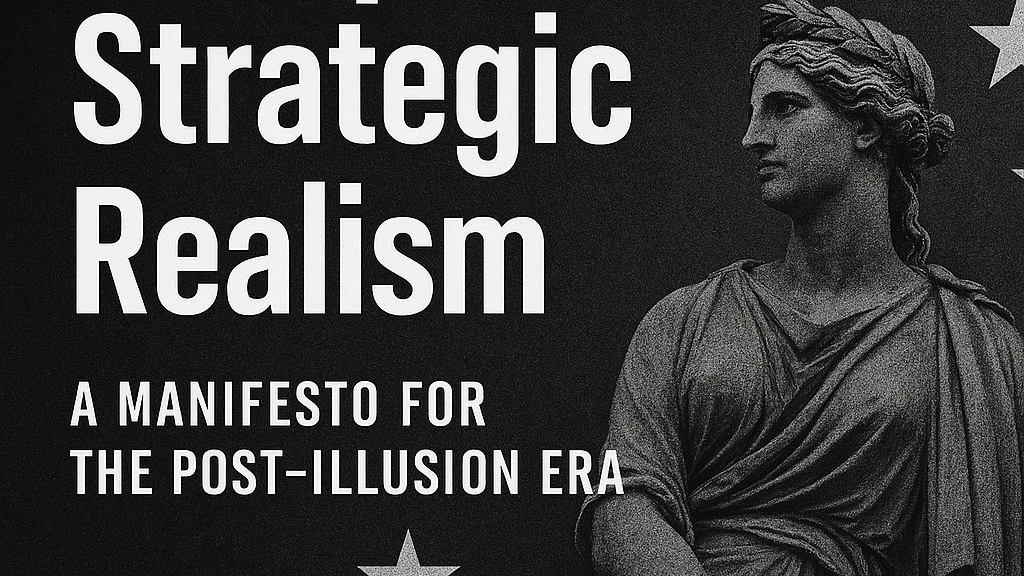
European Strategic Realism: From Illusion to Resilience
A changing landscape — for decades, Europe operated on the assumption that peace, integration, and shared values would naturally extend across the globe. Institutions, treaties, and economic frameworks were built on the belief that cooperation would outweigh conflict.
The 2020s have disrupted that model. Power—not ideals—now shapes the international environment. Adversaries bend rules, alliances grow less predictable, and European societies increasingly question whether the old framework still delivers security or prosperity.
This shift is not a cause for retreat. It is a call for adaptation. The task is not to abandon European values, but to defend them with realism, strategic autonomy, and renewed strength.
Old Assumptions No Longer Hold
- Russia — no longer a partner in modernisation, but an expansionist power
- China — not converging with liberal norms, but exporting authoritarian infrastructure
- United States — a vital ally, yet increasingly unpredictable as domestic divisions reshape its global posture
- Democracy — no longer self-sustaining, requiring active protection against disinformation and polarisation
These shifts are structural, not temporary. Europe must recognise the environment for what it is.
From Normative Power to Strategic Power
Values alone are insufficient. Europe must pair norms with capacity by:
- Building coordinated European defence capability
- Developing autonomy in energy, AI, semiconductors, and critical materials
- Integrating cyber readiness and economic leverage into diplomacy
Strategic Clarity Over Naivety
Not all global actors share Europe’s assumptions. Some prioritise control, coercion, or conquest. Recognising this reality does not betray European ideals—it enables their defence.
- Strengthen defence and intelligence capacity
- Build societal resilience before projecting models abroad
- Anchor diplomacy in both values and credible deterrence
Internal Strength Comes First
External credibility depends on internal cohesion. Europe must:
- Advance fiscal, security, and political integration
- Reinforce civic education, critical thinking, and cultural literacy
- Reform EU governance to be leaner, more accountable, and electorally grounded
A Renewed Foreign Policy Doctrine
- Engage systemic rivals such as Russia and China with realism
- Partner with the Global South through investment and development
- Align with democratic mid-powers—India, Japan, South Korea, Australia—on innovation and shared norms
Conclusion: Continuity Through Strength
The European project cannot survive as an ideal alone. It must demonstrate capacity, unity, and strategic realism. This does not weaken the European vision—it secures it.
The future belongs to societies that recognise reality early, adapt deliberately, and defend their values with confidence. Europe still has that opportunity—if it chooses clarity over illusion and resolve over complacency.