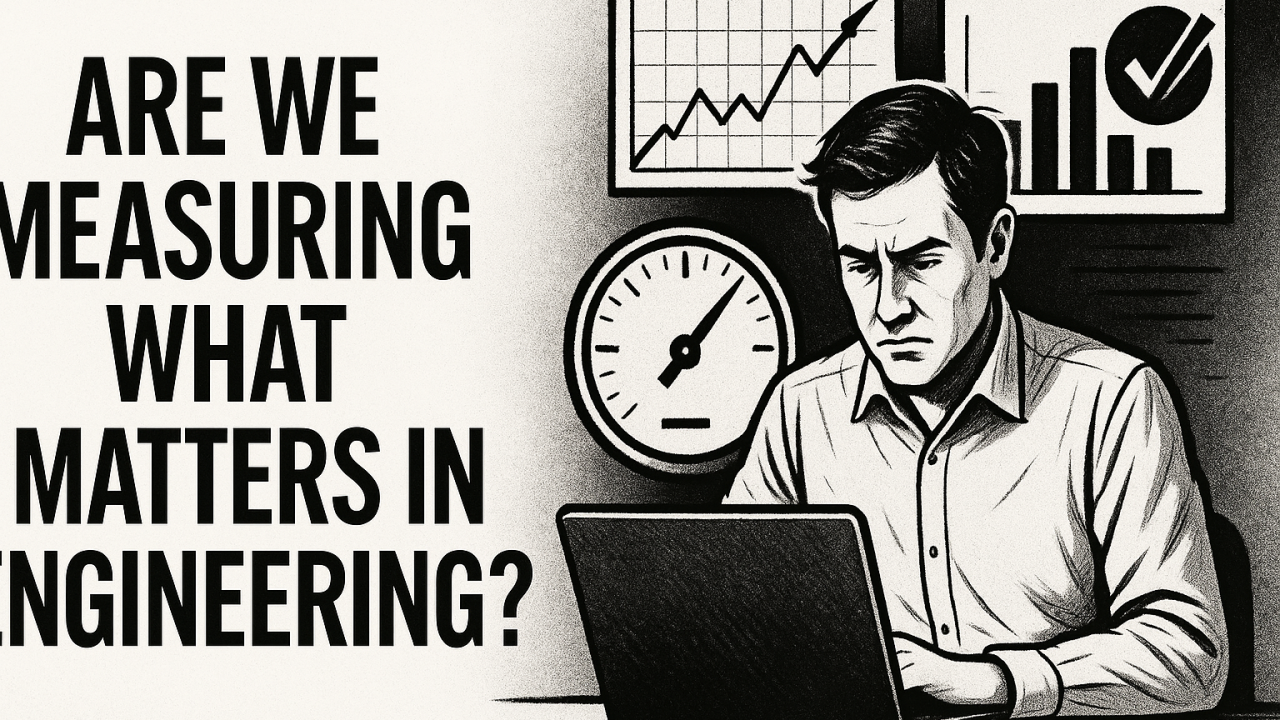
Engineering Excellence Starts with Measuring the Right Things
The gap between testing and reality is widening inside many technology organisations. Candidates are frequently assessed through rapid-fire coding tests or demo-style builds—small dashboards, quick charts, or benchmark optimisations.
These exercises create the appearance of rigour, yet they often reward surface-level execution while overlooking the qualities that actually sustain resilient systems and collaborative teams.
The Risks of Shallow Evaluation
- Misaligned hiring: Selecting for speed under artificial constraints filters out engineers who excel at designing scalable, maintainable architectures.
- Cultural fragility: When polish and quick fixes outweigh craftsmanship, teams drift toward firefighting instead of building durable solutions.
- Erosion of standards: Over time, prioritising trivia over depth lowers both the technical and cultural bar.
- False signals: Shiny demos can mask fragility, leading to instability that surfaces later with customers or regulators.
What Really Builds Strong Teams
Assessments that reflect modern engineering practice focus on the qualities that compound over time:
- Architectural thinking: How candidates reason about scalability, maintainability, and trade-offs—not just how fast they hack a solution.
- Judgment under complexity: The ability to explain decisions, anticipate risk, and adapt designs as constraints evolve.
- Depth as strength: Valuing thoughtful reasoning, code quality, and collaboration alongside delivery speed.
- Responsibility and impact: Awareness of how technical decisions affect clients, colleagues, and the wider ecosystem.
Aligning hiring with excellence means recognising that speed alone is not a proxy for capability. Sustainable performance emerges from clarity of thought, disciplined design, and integrity in execution.
By refining how talent is evaluated, organisations attract engineers who not only deliver quickly, but also build resilient, trustworthy systems that endure under real-world pressure.